
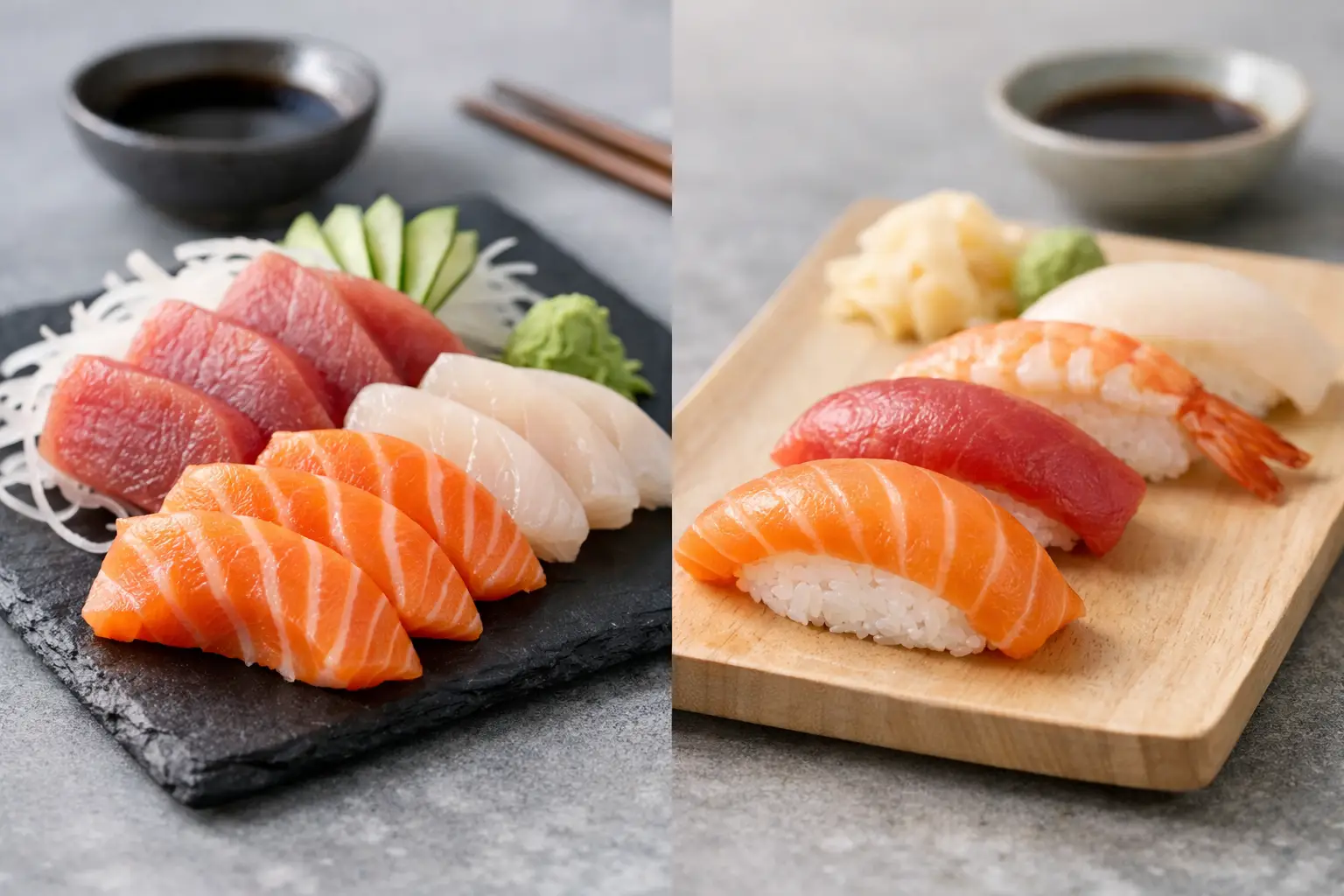
Sashimi vs Nigiri Guide for Better Ordering
The moment the sushi menu lands on the table, one question tends to decide the rest of the meal: sashimi or nigiri? If you have ever paused between the two, this sashimi vs nigiri guide is here to make the choice feel less technical and far more enjoyable. Because once you know the difference, ordering becomes part of the pleasure – more intuitive, more confident, and much more delicious.
In a beautiful seaside setting, that distinction matters even more. Sushi is not just about what arrives on the plate. It is about temperature, texture, the quality of the cut, the balance of rice, and the rhythm of the meal. Sashimi and nigiri may look closely related, but they create very different experiences from the first bite.
Sashimi vs Nigiri Guide: The Core Difference
At the simplest level, sashimi is sliced raw fish or seafood served without rice. Nigiri is a hand-formed bite of vinegared sushi rice topped with fish or seafood. That is the clean distinction, and it is the one most diners need.
But the real difference goes beyond ingredients. Sashimi is about purity. It puts the spotlight entirely on the fish – its freshness, fat content, texture, and finish. Nigiri is about harmony. It pairs the character of the fish with the gentle structure of rice, creating a bite that feels more composed and complete.
If sashimi is the stripped-back expression, nigiri is the curated one. Neither is better across the board. It depends on what kind of meal you want and what kind of sensation you are chasing.
What Sashimi Feels Like on the Plate
Ordering sashimi is often the choice for diners who want to taste the ingredient in its clearest form. There is no rice to soften the flavor, no extra body to round it out. Every detail is exposed. A buttery cut of salmon feels lush and almost silky. Tuna can taste clean, meaty, and elegant. Yellowtail often brings a softer, more delicate richness.
That purity is exactly why sashimi can feel so refined. It is direct and confident. It asks for good fish, careful slicing, and proper temperature. When those elements are right, sashimi has a kind of quiet luxury to it.
It also tends to feel lighter. If you are in the mood for something fresh and polished, especially in warm weather, sashimi has an almost effortless appeal. It suits slow lunches, sunset dining, and meals where you want to keep the experience airy rather than filling.
Still, sashimi is not always the first recommendation for every diner. If you are new to sushi, it can feel more intense because nothing buffers the flavor. For some people, that is the thrill. For others, nigiri offers a more approachable introduction.
What Nigiri Brings That Sashimi Does Not
Nigiri adds rice, and that changes everything. Sushi rice is not a neutral base. It is seasoned, gently acidic, slightly sweet, and designed to support the fish rather than disappear beneath it. A well-made piece of nigiri feels balanced in a way sashimi does not try to be.
The rice gives the bite structure and softness. It makes lean fish feel rounder and rich fish feel more measured. That balance is why nigiri is often the more versatile option for a full meal. It can move from delicate white fish to tuna to salmon in a sequence that feels layered and satisfying.
Nigiri also tends to be easier for first-time sushi diners to enjoy. The rice softens the intensity of raw seafood and makes each piece feel familiar, even if the topping is new. If sashimi is about concentration, nigiri is about composition.
When prepared well, nigiri should never feel heavy. The rice should be lightly packed, not dense. The topping should drape naturally over the rice, not overwhelm it. One bite should feel clean, polished, and precise.
Sashimi vs Nigiri Guide for Different Dining Moods
If you are deciding what to order based on mood rather than definition, the answer becomes clearer.
Choose sashimi when you want to focus on the fish itself. It is ideal for diners who appreciate nuance, care about texture, and enjoy a more minimal, elevated style of eating. It also works beautifully as part of a shared table, where a platter of carefully sliced fish sets a sophisticated tone from the start.
Choose nigiri when you want balance and progression. Nigiri feels a bit more complete, a bit more structured, and often more satisfying as the center of the meal. It is excellent for a relaxed lunch, a date-night dinner, or any occasion where you want variety without losing elegance.
There is also a practical side to the decision. If you are especially hungry, nigiri will usually feel more substantial because of the rice. If you are ordering alongside cocktails, wine, or several other dishes, sashimi may feel lighter and more fluid within the meal.
Which One Shows Fish Quality Better?
If the goal is to judge the quality of the fish itself, sashimi is the clearest test. With no rice involved, there is nowhere to hide. The cut, freshness, texture, and flavor are fully visible and fully tasted.
That does not mean nigiri is less premium. In fact, excellent nigiri can be every bit as luxurious. It simply tests a different skill set. Great nigiri is about proportion, seasoning, temperature, and touch. The fish matters enormously, but so does the rice, and so does the chef’s ability to marry the two.
For diners who already know they love raw fish, ordering both often gives the best perspective. Sashimi lets you experience the fish in its purest form. Nigiri lets you enjoy how that same fish behaves in balance with rice. The contrast is part of the pleasure.
How to Order With More Confidence
If you are still unsure, start with what sounds more appealing physically. Do you want something clean, cool, and almost weightless? Go with sashimi. Do you want a bite that feels a little more rounded and satisfying? Order nigiri.
You can also think about the flow of the table. Sashimi works beautifully early in the meal, especially with lighter drinks and a fresh appetite. Nigiri often makes sense as the meal settles in and you want something more structured. When dining in a setting built around atmosphere as much as flavor, that pacing matters. It shapes how the entire experience unfolds.
For couples or groups, a mix is usually the smartest move. A sashimi selection creates that immediate visual impact – pristine slices, clean plating, a sense of ceremony. A nigiri assortment adds variety and comfort. Together, they create a table that feels abundant without feeling excessive.
Common Misunderstandings About Sashimi and Nigiri
One of the biggest misconceptions is that all raw fish served at a sushi restaurant is sushi. It is not. Sashimi is its own category. Sushi, strictly speaking, refers to the vinegared rice, which is why nigiri falls under sushi and sashimi does not.
Another misunderstanding is that sashimi is always more advanced or more expensive. Sometimes it is, especially when premium cuts are involved, but not always. Price depends on the fish, the portion, and the style of service. Nigiri can be just as elevated, particularly when the rice is treated with care and the fish selection is exceptional.
Some diners also assume nigiri is simply sashimi placed on rice. In a technical sense, that sounds close, but in practice it misses the point. Proper nigiri is built for balance. The size of the fish, the amount of rice, and the seasoning all need to work together. It is a composed bite, not an improvised one.
When Sashimi Is the Better Choice
Sashimi shines when the fish is the event. It suits diners who care about clean flavors and a more direct expression of quality. It also pairs naturally with a polished, summer-forward meal – something crisp to drink, a beautiful view, and dishes that let freshness lead.
In places where ambiance matters, sashimi has a certain visual restraint that feels especially sophisticated. It does not ask for attention loudly. It earns it quietly.
When Nigiri Wins
Nigiri is often the better choice when you want comfort without losing refinement. It has that rare quality of feeling both familiar and elevated. Each piece offers contrast – cool fish, seasoned rice, softness, structure. It is the kind of order that satisfies both experienced sushi lovers and guests who are still building confidence with Japanese cuisine.
At a destination dining table, nigiri also fits beautifully into a longer meal. It can sit alongside signature rolls, cocktails, or fusion plates without feeling too stark or too heavy. That versatility makes it a favorite for many diners.
At Hanabi Seaside Sushi Milos, where sushi is part of a broader celebration of taste shaped by sea air, polished service, and effortless coastal elegance, that choice becomes less about rules and more about mood.
The best order is rarely about proving what you know. It is about knowing what you want from the moment – pure flavor, balanced texture, a lighter start, a more satisfying finish. Once you understand that, sashimi and nigiri stop competing and start doing what they do best: turning a meal into something worth lingering over.



Pingback: Chef Curated Sushi Selection in Milos - hanabimilos.gr