
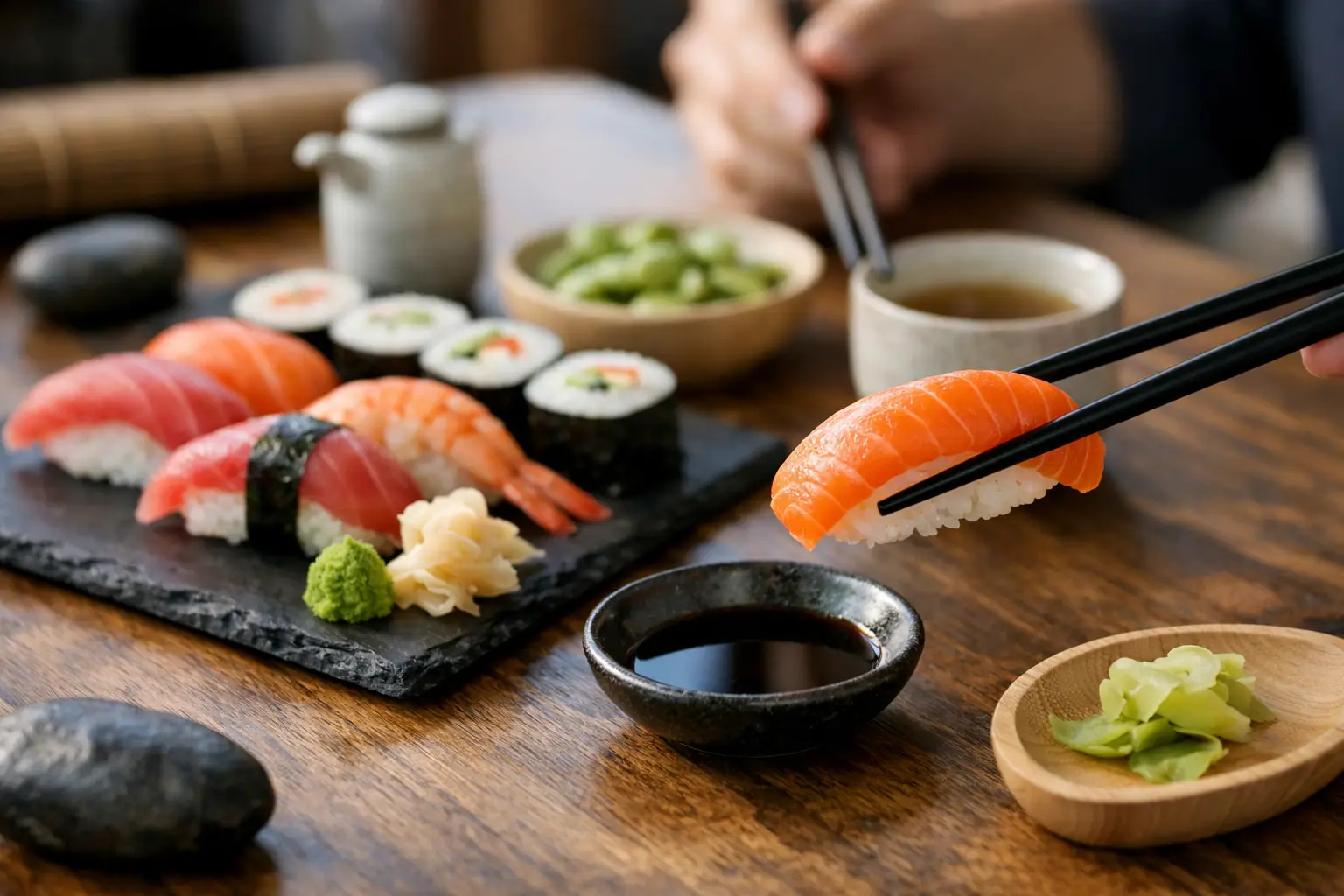
A Guide to Sushi Etiquette
The first piece arrives looking almost too beautiful to touch – glossy fish, precise rice, a brush of sauce, the sea just beyond your table. That is exactly why a good guide to sushi etiquette matters. Sushi is not about rigid rules meant to intimidate you. It is about reading the room, respecting the craft, and letting the experience feel as polished as the plate in front of you.
At its best, sushi etiquette adds ease. You know when to use your hands, how much soy sauce is enough, and why drowning a delicate nigiri in wasabi misses the point. In a refined setting, those details shape the rhythm of the meal. They help you enjoy the food with confidence, whether you are ordering a few elegant bites at sunset or settling into a longer dinner with cocktails and a sea-breeze soundtrack.
A guide to sushi etiquette starts with respect
The core idea is simple: sushi is designed to be experienced as the chef intended. That does not mean every bite must follow one strict formula. It means paying attention to balance – temperature, texture, seasoning, and sequence.
Nigiri, for example, is already carefully composed. The rice is seasoned, the fish is selected for a certain texture and fat content, and in many good restaurants the chef may already add the right amount of soy, citrus, or garnish. If extra soy sauce, wasabi, or aggressive mixing is your default, it is worth pausing first. Taste before adjusting. In premium sushi, subtlety is part of the luxury.
Respect also extends beyond the food itself. Arriving on time for a reservation, being present at the table, and treating the service team with warmth are all part of the experience. Sushi dining can feel theatrical, but the best kind of theater is effortless.
Chopsticks, hands, and what is actually correct
One of the most common questions in any guide to sushi etiquette is whether sushi should be eaten with chopsticks. The answer is reassuringly flexible. Nigiri may be eaten with either chopsticks or clean hands. Sashimi should be eaten with chopsticks. Rolls are usually easiest with chopsticks, though no one should feel awkward if a delicate piece needs a gentler approach.
Using your hands for nigiri is not a breach of formality. In many cases, it is the more natural choice. A well-made piece is delicate, and fingers can help keep it intact. The goal is not performance. The goal is to preserve the bite as it was assembled.
If you are using chopsticks, a few small details make a difference. Do not rub disposable chopsticks together. It suggests poor quality and can read as dismissive in a polished setting. When resting them, place them neatly on the holder rather than across a plate or bowl. And try not to spear food or wave chopsticks while talking. None of this is dramatic, but it contributes to a calmer, more refined table presence.
Soy sauce and wasabi: less is usually better
This is where many sushi meals go off course. Soy sauce is there to complement, not dominate. With nigiri, the fish – not the rice – should lightly touch the soy sauce. If the rice absorbs too much liquid, the piece can fall apart and the seasoning becomes heavy. A quick, restrained dip is enough.
Wasabi deserves the same restraint. In many high-quality sushi experiences, the chef has already added the right amount between fish and rice. Piling more into the soy sauce creates one loud flavor rather than a composed bite. If you truly love extra heat, use it intentionally and sparingly.
The same goes for pickled ginger. Ginger is a palate cleanser, not a topping for sushi. It is meant to be eaten between bites, especially when moving from one kind of fish to another. Think of it as resetting the scene before the next course arrives.
Ordering with confidence
Sushi etiquette is not only about how you eat. It also shapes how you order. If you are new to a menu, begin with lighter flavors and move toward richer ones. White fish often comes before salmon, tuna before toro, and simpler nigiri before heavily sauced rolls. This progression lets each bite remain distinct.
That said, context matters. If your table is sharing signature rolls, sashimi, small plates, and cocktails in a more social, seaside setting, strict sequencing becomes less important than balance. A composed dinner can still feel relaxed. The polished move is simply not to crowd the table with too many intense flavors at once.
If you are unsure, ask for guidance. In a strong restaurant, that is never a faux pas. It shows interest, not inexperience. Asking what is best that day, which sashimi is most delicate, or what pairs well with a crisp white wine or a clean cocktail often leads to a better meal than ordering mechanically.
How to eat nigiri the right way
Nigiri is one of the purest expressions of sushi, and it rewards a little attention. Ideally, eat it in one bite. The proportion of fish to rice is designed that way, and splitting it can disturb the structure. If a piece is unusually large, do your best, but avoid biting it in half and setting the rest back down if possible.
When lifting nigiri, turn it slightly so the fish side meets your tongue first. This is not mandatory, but it is often recommended because the flavor and texture of the fish are meant to lead. It is a small shift that can make the bite feel more complete.
And timing matters. Sushi is best enjoyed soon after it is served, especially nigiri. Rice changes temperature quickly, and a piece left waiting loses some of its intended balance. A lingering dinner is lovely. Letting each piece sit too long is less so.
Sashimi, rolls, and sharing at the table
Sashimi has its own rhythm. Because there is no rice, the focus is entirely on the fish – its texture, temperature, and clean finish. Dip lightly, if at all. Some pieces shine more with a touch of soy, while others may already be dressed. Again, tasting first is often the smartest move.
Rolls are where etiquette becomes more relaxed, especially in modern sushi restaurants with creative combinations and bolder sauces. Here, the experience can be a little more playful. Still, the same principle applies: avoid overwhelming the flavors before you know what the chef intended.
If you are sharing, serve thoughtfully. Take from the communal plate cleanly and avoid hovering over it while deciding. In a stylish group dinner, grace is often just good timing.
The atmosphere matters too
A polished sushi experience is about more than mechanics. Etiquette also lives in the energy you bring to the table. Keep phones from taking over the meal. Photograph the first beautiful plate if you like, then return to the experience. The point is not just to document the moment, but to live inside it.
Volume matters as well. Lively conversation suits a coastal dinner beautifully, but shouting across the table breaks the mood fast. In a space built around presentation, service, music, and pace, your presence becomes part of the atmosphere.
This is where a destination setting can elevate everything. In a place like Hanabi Seaside Sushi Milos, where sushi, cocktails, and sea views come together in a distinctly refined rhythm, etiquette is less about old-school formality and more about matching the elegance around you. You do not need to become an expert. You only need enough fluency to let the experience unfold naturally.
What not to overthink
The most useful guide to sushi etiquette also leaves room for ease. You do not need perfect chopstick technique to enjoy exceptional sushi. You do not need to memorize every fish in Japanese. And you do not need to perform sophistication to belong in a premium dining room.
If you are attentive, curious, and willing to hold back on over-seasoning, you are already most of the way there. Good etiquette is not stiff. It is quiet confidence.
There are also moments when rules bend. A chef-driven omakase experience is different from a long, social dinner with fusion plates and signature rolls. A minimalist counter in Tokyo calls for one kind of rhythm. A stylish seaside table with wine, music, and sunset light invites another. Knowing the difference is part of real dining literacy.
The most memorable sushi meals do not feel like etiquette exams. They feel smooth, sensual, and beautifully paced – each bite landing exactly as it should, each detail enhancing the next. If this guide changes anything, let it be this: approach sushi with a little more care and a little less force, and the entire experience becomes more delicious.



Αφήστε μια απάντηση